
Summary:Choosing between open and enclosed auto transport depends on your vehicle’s value, condition, budget, and shipping requirements. Open carriers suit many standard vehicles, while enclosed carriers offer additional protection from weather and road debris. Understanding these differences helps you compare quotes, plan delivery, and coordinate vehicle shipping with relocation moving services. A clear assessment of your priorities helps you select the right transport option for your move.
Moving a vehicle across state lines involves more than arranging pickup and delivery. You also need to consider how the carrier transports your car, what exposure it faces during transit, and how much protection your circumstances require. Customers researching long distance moving companies in Los Angeles may also compare vehicle shipping options when relocating their household and car to another state. Open and enclosed transport serve different needs, so understanding their practical differences helps you make an informed decision.
How Does Open Auto Transport Work?
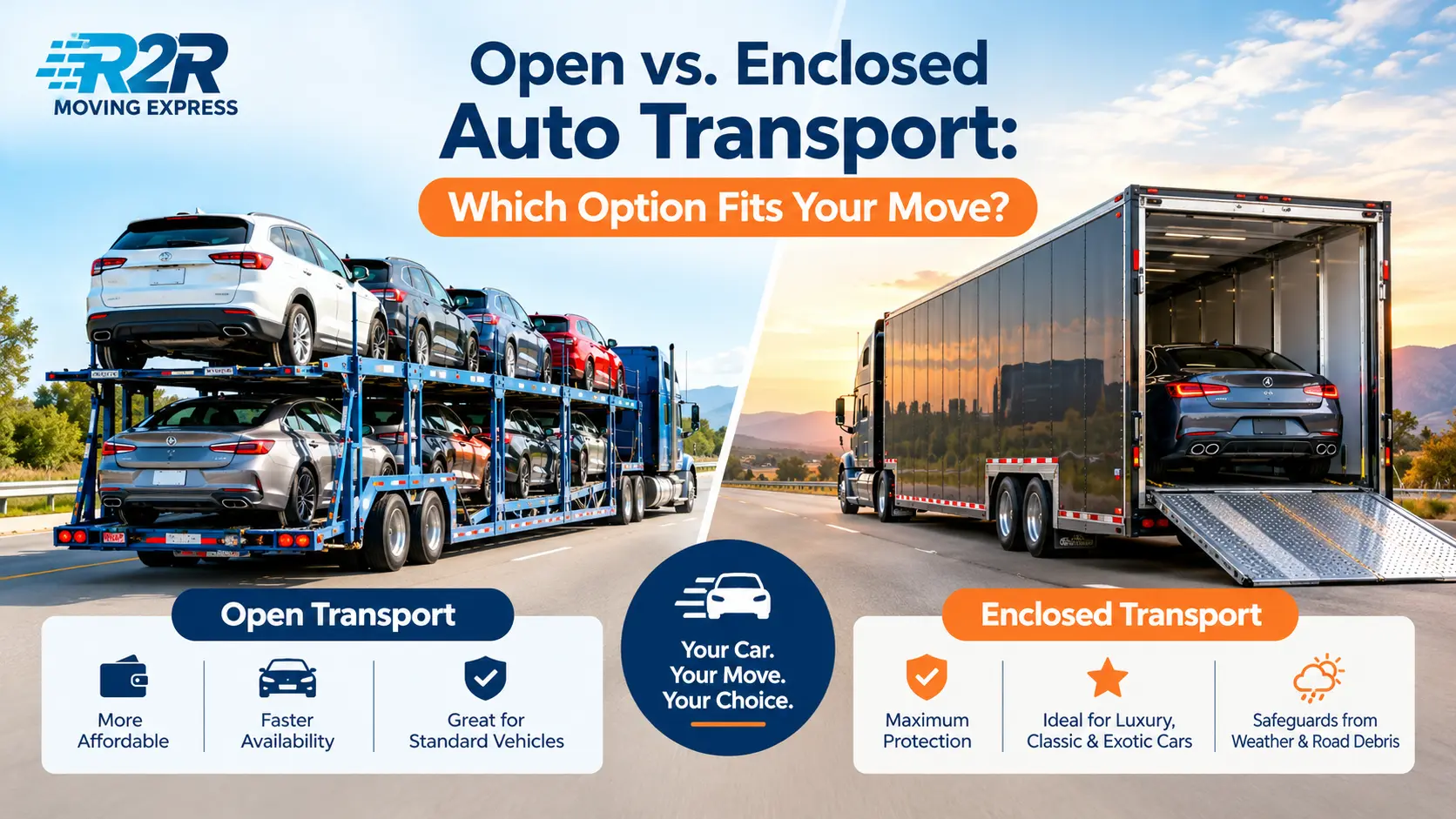
Open Auto Transport is a type of carrier vehicle that has an open platform to transport several vehicles in one go. This is a method which is familiar to most people because the multi-level trailers that are used to move cars to dealerships are using the same technique. Auto transport companies use open carriers to move privately owned vehicles between states.
Benefits of Open Transport
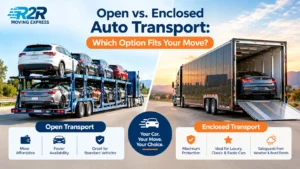
Open transport is the most widely used type of transport because it is widely available and low cost. Carriers usually carry more than one vehicle per journey, thereby sharing the costs of transport among various customers.
Key benefits include:
- Lower shipping rates: They tend to be more economical as compared to enclosed carriers.
- Open carriers: Many transport companies will allow open carriers which will give customers more scheduling options.
- Suitable for everyday vehicles: Sedans, SUVs, and many standard cars travel successfully on open carriers.
- Efficient vehicle transport: Several cars can be loaded on one carrier and transported through pre-designed routes.
What Are the Limitations?
Open carrier vehicles are exposed to outside elements like rain, dust, road debris, and more. However, this does not automatically mean that damage will occur, but it can be a worry for owners of newly restored or valuable cars.
The open transport system is one that has relatively less physical isolation from the traffic and environment than the closed trailer. This aspect has to be considered in relation to the vehicle’s state and worth.
How Does Enclosed Auto Transport Work?
Enclosed auto transport carries cars within an enclosed trailer. The sides and roof act as a barrier from direct exposure to the weather and most of the debris on the road. The number of vehicles that the trailer can carry is limited by the carrier.
Benefits of Enclosed Transport
Enclosed transport suits owners who are looking for added protection in transit. This is particularly applicable in the case of cars which have a desirable appearance that needs maintenance, or have high value in the market and exhibit needs for better insulation.
Important advantages include:
- Weather protection: The vehicle is protected from the rain/sun and snow when inside the enclosed trailer.
- Reduced road-debris exposure: The trailer creates a physical barrier against most debris kicked up during transit.
- Added privacy: covers the vehicle and means more privacy in transport.
- Specialized handling options: Some enclosed carriers have the ability to haul low ground clearance vehicles, for instance by providing lift gates.
Classic car owners, exotic car owners, luxury car owners, and even restored cars usually prefer enclosed car shipping for the reason that maintaining the car’s condition takes priority over reducing transportation costs.
What Should You Consider?
The cost of an enclosed transport is usually higher than the cost of an open transport. Availability is also made to be limited in some cases, such as routes, availability of vehicles, and pickup date. Some specialized carriers provide extra equipment or handling methods, depending on the carrier.
Damage-free shipping is not guaranteed with enclosed shipping either. Before booking customers should also check into the carrier’s insurance coverage, inspection, contractual policy and claims handling.
Which Auto Transport Option Fits Your Vehicle?
The choice should be based on the car, the journey and your expectations.
Choose Open Transport for Everyday Vehicles
Open transport is okay for those who need to ship their regular automobile such as the family SUV or a standard car. It’s also an option for customers who value cost-effectiveness and flexible scheduling for their pick up.
Check the condition of the car before placing a reservation. Take a picture of its outside, note any scratches or dents, and verify its condition paperwork process at pick up and delivery.
Choose Enclosed Transport for High-Value Vehicles
This type of enclosed transport is worth considering when about to send an antique vehicle, collector’s car, sportscar or restored car. The extra expense might be worthwhile for those that need to limit their exposure to weather conditions and the road debris it brings.
If you have a significant ground clearance, modified suspension or suspension adjustments that need special handling, discuss loading the equipment with the provider. Verify the size and loading of the carrier before making a reservation.
Consider Your Entire Relocation Plan
Car shipment is an important component of the bigger relocation process. If the rest of your things ship separately, make sure that the timing for picking up and delivering your car is coordinated with the time of your move. This will enable you to plan your trip to your new place.
While organizing your move, Road 2 Road Moving Express provides auto transport service in addition to their home and long-distance moving services in order to enable customers to plan their household relocation along with vehicle transportation needs. You can get the advice of Road 2 Road Moving Express’s moving consultants for your moving plans.
Conclusion
Open and enclosed auto transport each serve a practical purpose. Open shipping generally suits standard vehicles and customers seeking a more economical option, while enclosed shipping offers additional protection for high-value, classic, and sensitive automobiles. The best choice depends on your vehicle, route, budget, and tolerance for exposure during transit.
Before booking, compare written estimates, verify carrier credentials, review insurance terms, and coordinate pickup and delivery with your household move. For guidance on planning your relocation and arranging related moving needs, contact Road 2 Road Moving Express to discuss your requirements and request a quote.
Frequently Asked Questions
1. Is open auto transport safe for everyday cars?
Yes. Open transportation is a commendable way of shipping conventional cars. The vehicle will stay in the outside environment, so check it upon arrival, take notes and verify coverage and procedures with the carrier.
2. Is enclosed auto transport worth the extra cost?
Enclosed transportation is valuable for classic cars, luxury cars, exotic cars, and even restoration projects, if minimizing exposure to the elements is important. Before spending extra money on that level of protection, think about the car’s value and condition.
3. Does enclosed transport guarantee that a car will arrive without damage?
The advantage of closed enclosures on trailers is that they limit exposure to some outside dangers, but do not remove all dangers of transport. Carrier handling, loading procedures, equipment and other factors are still important.
4. Should I book auto transport separately from my household move?
The cost of open transport is lower than enclosed transport. Specific distance, vehicle size, traffic condition of the route, time, carriage availability and particular treatment will all influence the final price. Compare and get written quotes prior to decision.