
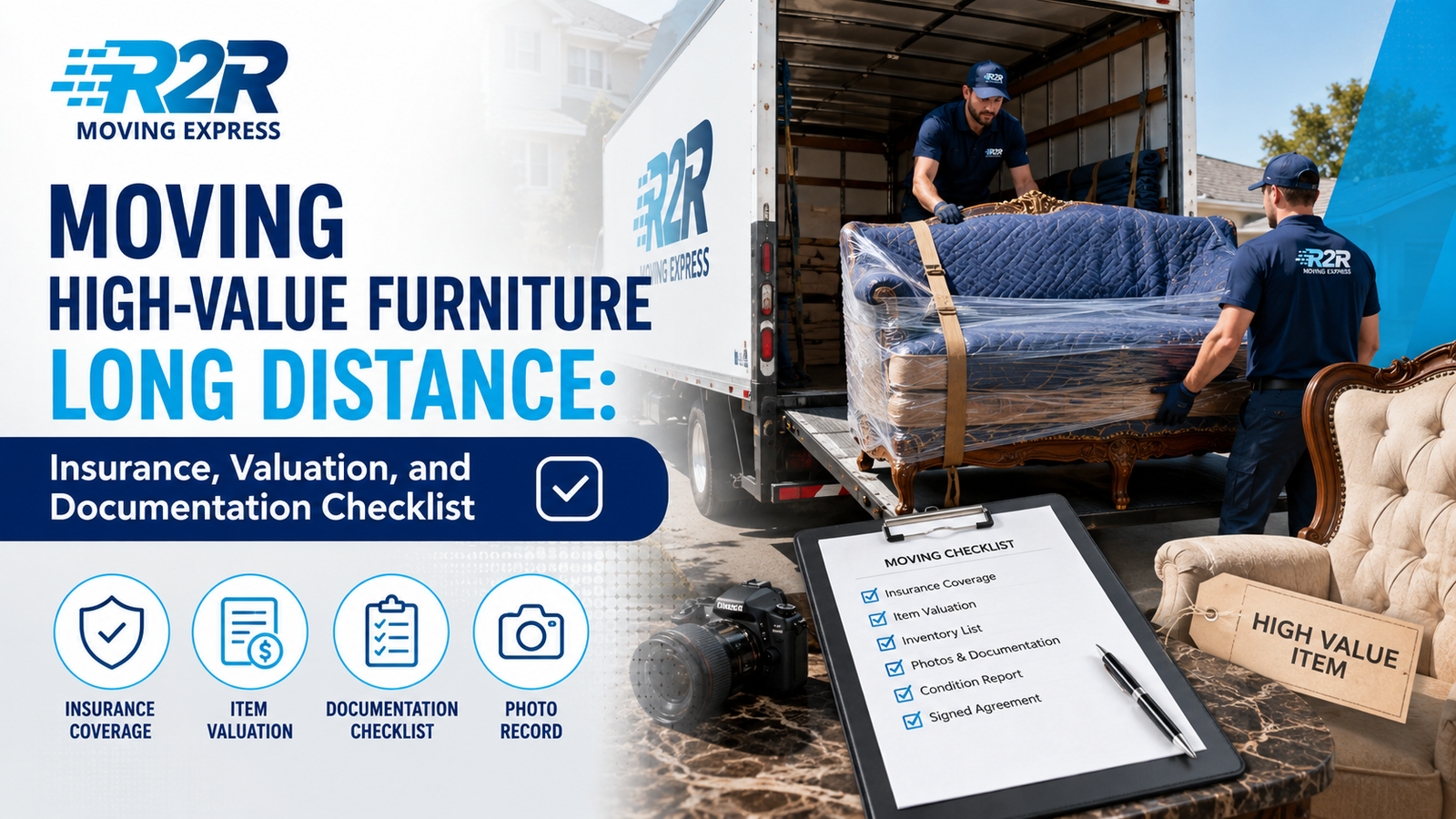
Summary: Moving valuable furniture involves much more than just careful packing. In order to safeguard valuable artworks during transit, insurance coverage, correct appraisement, and adequate documentation prove to be of critical importance. This article will discuss the key measures that can be taken by the homeowner before employing Texas long-distance movers to ensure a safe and documented move.
Many homeowners assume careful packing alone guarantees protection. In reality, successful relocations rely on three equally important factors: proper insurance, accurate valuation, and detailed documentation. Understanding these elements before hiring Texas long-distance movers helps minimize financial risks and simplifies claims should damage occur.
Understand the Difference Between Moving Insurance and Valuation Coverage
One of the biggest misconceptions when relocating concerns insurance coverage. Traditional insurance may not be included as a default feature with moving companies. Rather they provide valuation reimbursement that affects how financially responsible the moving company is in case the items are damaged or lost.
Common options include:
- Basic Value Protection where only minimal is reimbursed based on item weight, i.e. $0.60 per lbs.
- Full Value Protection, where the mover is responsible for repair, replacement, or compensation up to the declared value.
Some homeowners may also get extra value protection with a third-party moving insurance, which offers greater safeguards against the value option.
Create an Accurate Furniture Valuation List
Appropriate valuation really starts several days before the moving day.
Make an itemized list of all valuable furniture including:
- Brand or manufacturer
- Purchase date
- Original purchase price
- The estimated market value at this time.
- Dimensions
- Material type
- Information about serial numbers (if applicable)
Reliable estimates are also more beneficial for long-distance furniture movers to suggest what safeguards themoving company should use when relocating.
Build a Complete Documentation File
Furniture documentation is proof of the furniture’s condition before moving.
The following should be incorporated into your organized documentation file:
- Multiple-angle high resolution photographs of the object(s) of study.
- Any close-ups of current scratches and imperfections.
- Receipts/Invoices should be incurred for purchases.
- Professional appraisal reports.
- Manufacturer warranties.
- Repair history.
- Serial numbers (if applicable).
When damage is present, care must be taken during transportation; documentation is essential to build a strong case and minimize disputes over any prior damage.
Look at furniture prior to & after moving:
Inspect Furniture Before and After the Move
Prior to the start of the move process, have high dollar items walked with the moving crew. Make sure that the conditions are accurate and that they are confirmed with one another before putting them on the inventory sheet.
Upon delivery check each item right before the final paperwork. Look for:
- Surface scratches
- Broken legs
- Loose joints
- Torn upholstery
- Cracked glass
- Water damage
- Missing hardware
It’s always better to report a problem as soon as it’s noticed to maximize your chances of success.
Ask Your Movers the Right Questions
When deciding whom to hire as long-distance furniture movers, you must consider more than just price.
Good communication sets expectations, thereby avoiding unnecessary misunderstandings down the road.
Final Checklist Before Moving Day
To make sure that valuable furniture is protected, use this handy checklist:
- Make detailed inventory.
- Take a picture of each piece of furniture.
- Compile receipts and appraisals.
- Select appropriate valuation coverage.
- Get additional insurance coverage, if required.
- Mark off valuables and breakables.
- Check furniture for damage on loading.
- Check delivery list of documents before signing.
A system will lessen the risks involved in long-distance furniture movers, while safeguarding the investment of money and sentimentality.
Conclusion
Trust the experienced professionals at Road 2 Road Moving Express to handle your valuable furniture with the care, protection, and expertise every long-distance move deserves.
FAQs
1. Why is valuation coverage important when moving expensive furniture?
This is the amount you could potentially receive in case your furniture gets damaged or lost while being moved, and is known as valuation coverage. It includes added financial coverage not offered by the ordinary moving company.
2. Is it advantageous to buy extra insurance for expensive furnishings?
Yes. For items that are substantial in value or have emotional value, additional coverage from a third-party insurance policy may cover more than the standard valuation coverage.
3. What documents should I prepare before moving valuable furniture?
Maintain photographs, purchase receipts, appraisal reports, warranties, repair history and a detailed inventory as evidence to be submitted in case of damage.
4. How do Texas long-distance movers protect expensive furniture?
Professional moving companies use their own packing material and blankets for furniture, motion protection, and safe Loading and handling methods for more valuable items.
5. When should I inspect my furniture during a long-distance move?
Before loading and after delivery, take an inspection of the furniture. Reporting any damage in advance will ensure that signing a final delivery document is easier to do.