





Moving across state lines affects several parts of family life, including work schedules, school arrangements, healthcare, and daily routines. Before making detailed arrangements, establish a shared timeline that identifies major tasks, responsible family members, and deadlines.
Families comparing moving companies in Southern California should also consider how the moving schedule fits their household’s specific needs. Confirming the expected pickup date, delivery window, and access arrangements early helps everyone prepare for the transition.
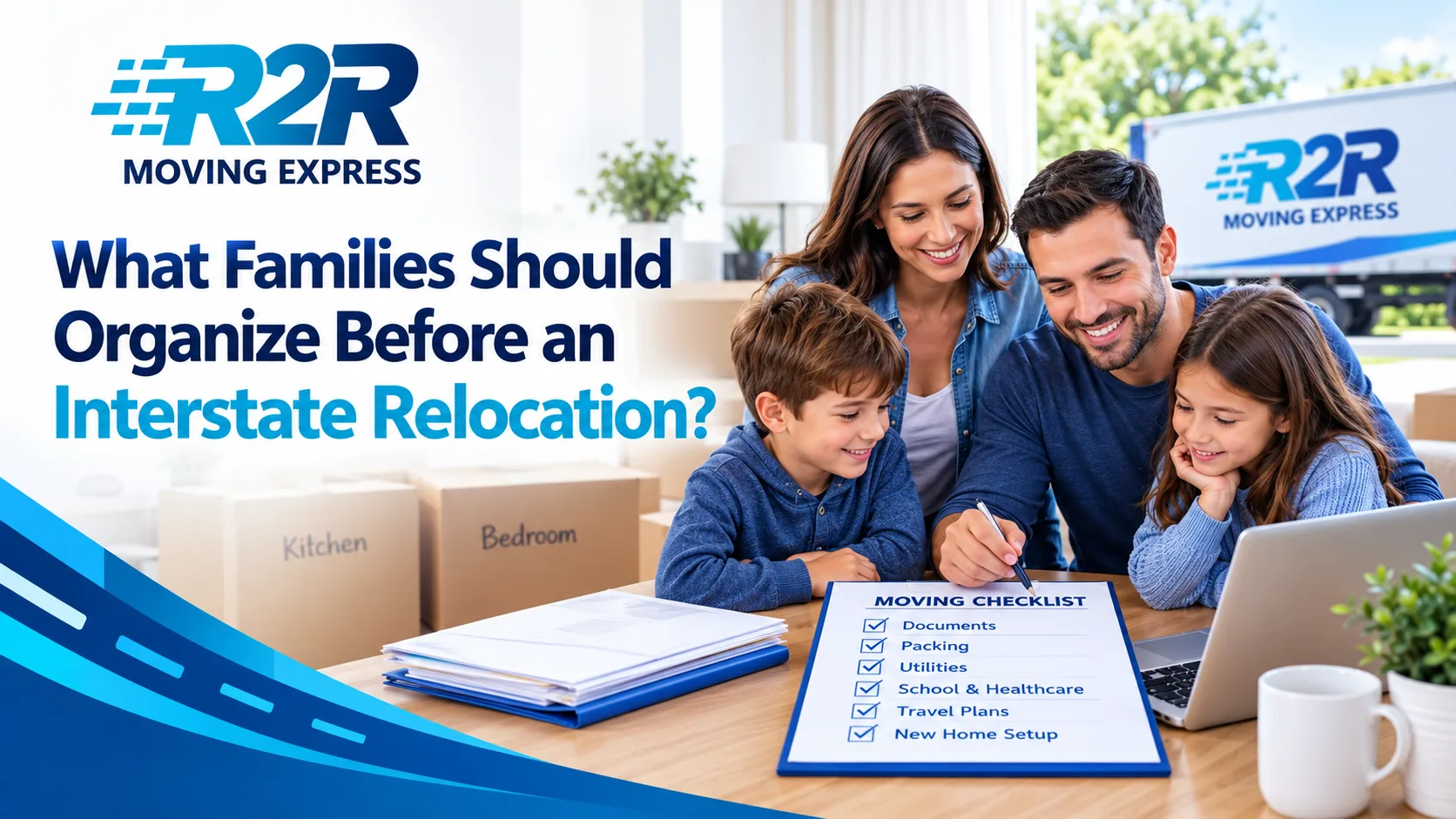
Create a central checklist that includes:
- Moving dates and important deadlines.
- Packing and decluttering responsibilities.
- School enrollment and record transfers.
- Utility disconnection and activation dates.
- Transportation and accommodation arrangements.
- Essential expenses and emergency funds.
Review the checklist regularly and update it whenever plans change.
1. Organize Important Documents
Keep essential documents accessible rather than placing them inside boxes that will travel with the household shipment. Some records may be needed before the move, during travel, or immediately after arrival.
Families should gather birth certificates, identification documents, passports, insurance information, medical records, school transcripts, and relevant legal or financial paperwork. Keep originals secure and maintain digital copies where appropriate, using password protection for sensitive files.
When coordinating with affordable interstate movers, keep the signed estimate, service agreement, inventory documents, payment records, and contact details in a separate folder. Having these records available makes it easier to verify agreed services and resolve questions during the move.
2. Prepare Children for the Transition
Children may experience changes in friendships, routines, schooling, and familiar surroundings during an interstate relocation. Giving them age-appropriate information about the move can help them understand what to expect and participate in preparation.
Parents should discuss the timeline, explain which belongings will travel with them, and involve children in manageable tasks. Younger children may benefit from keeping familiar toys and comfort items accessible, while older children may want to organize personal belongings independently.
Families researching moving companies in southern California should consider how pickup and delivery schedules affect children’s routines. If possible, plan travel and moving-day activities to reduce long periods of waiting and keep essential items within reach.
3. Coordinate School and Healthcare Arrangements
School enrollment and medical continuity require attention well before moving day. Contact the new school or school district to confirm enrollment requirements, deadlines, and the records needed for registration.
Request copies or transfers of report cards, academic assessments, vaccination records, and other relevant educational documents. Requirements vary by school and jurisdiction, so confirm what must be submitted and whether original documents are necessary.
For healthcare, arrange copies of medical histories, prescription information, and vaccination records. Confirm prescription refill arrangements and identify how to obtain care during the transition. Families using affordable interstate movers should keep these records and essential medications with them rather than packing them in the shipment.
4. Sort Belongings Before Packing
Packing everything without reviewing its usefulness increases the number of boxes, the amount of handling, and potentially the overall moving cost. A household inventory helps families decide what should be transported, donated, sold, recycled, or discarded.
Use a Room-by-Room Approach
Work through one room at a time and separate belongings into clear categories:
- Keep: Items needed in the new home.
- Donate or sell: Usable belongings the family no longer needs.
- Dispose of: Damaged or unsuitable items.
- Pack separately: Documents, valuables, and daily essentials.
Create an inventory of furniture and larger items before requesting or finalizing a moving estimate. Significant changes to the shipment may affect the quoted price, vehicle space, or labor requirements.
When comparing moving companies in Southern California, provide an accurate inventory and disclose oversized furniture, fragile objects, and items requiring special handling. Also ask about restrictions on hazardous materials, perishable goods, and other items that may not be accepted for transportation.
5. Prepare a First-Night Essentials Kit
The household shipment may not be available immediately upon arrival. Delivery timing can vary depending on the agreed transportation schedule and other logistical factors. Families should therefore prepare for at least the first day or two without relying on packed belongings.
Include:
- Clothing and toiletries for each family member.
- Prescription medications and basic first-aid supplies.
- Chargers, important documents, and personal devices.
- Snacks, reusable water bottles, and basic utensils.
- Bedding or other necessities, depending on accommodation.
- Pet food, leashes, carriers, and required supplies.
Keep the kit in a personal vehicle or another accessible location. Discuss delivery expectations with affordable interstate movers so you can plan for any gap between departure and access to your household goods.
6. Finalize Logistics and Household Services
Before leaving, confirm the moving arrangements, travel plans, and responsibilities for both properties. Verify pickup details, access instructions, contact information, and the expected delivery window. Arrange utility shutoff at the current home and activation at the new residence according to the relevant providers’ requirements.
Families comparing moving companies in southern California should review the written estimate and service agreement, confirm applicable valuation protection, and ask about additional charges that could arise from stairs, long carries, storage, or schedule changes.
Complete a final walkthrough to check closets, cabinets, storage areas, and outdoor spaces. Record the condition of the home if required for a lease or property handover, and ensure keys, access devices, and relevant paperwork are ready.
Conclusion
A successful interstate relocation begins with organized preparation. By managing documents, school and healthcare records, household inventory, essential supplies, and transportation arrangements early, families can reduce avoidable stress and maintain greater control over the process. Choosing affordable interstate movers should involve more than comparing prices. Review the scope of service, scheduling terms, liability options, and communication practices before booking. A clear plan, realistic timeline, and well-prepared essentials kit help every family member navigate the transition with greater confidence.